Compare
Performance or village tour?
Whakarewarewa's 30-minute performance or the guided village tour: what each ticket covers, how long to allow and which suits your visit.
Book the performance ↗Quick answer
Book the performance if you have little time and want the haka, songs and poi explained in about 30 minutes. Add the guided village tour if you want to see the village itself: the village's own site says there is no access to the village without a guide. They are separate tickets, so you can book either one, or both on the same day.
The short answer
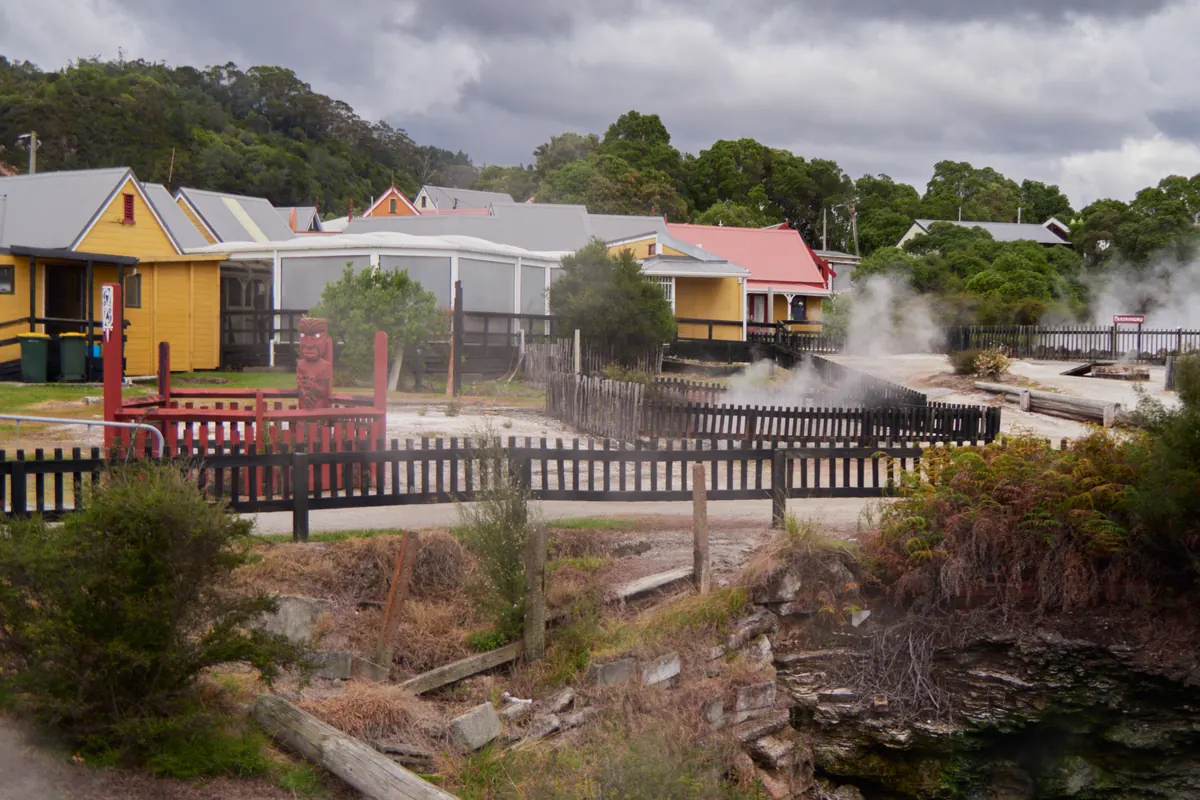
Choose the performance if your time is short or you want the songs and haka explained and nothing else. Choose the village tour as well if you want to see how the village is arranged and how its people use the ground. The ticket on this site is the performance, with a host to show you in after check-in. The tour is the second card in the booking section, and it is a separate booking. Neither includes a meal, and neither is an evening event. The rest of this guide sets out what each one covers so that you can decide before you pick a date.
What the performance ticket covers
The performance lasts about 30 minutes and is wheelchair accessible. It includes waiata, haka, poi and stick games, with the meaning explained, and a host who shows you in after you check in at reception. The village limits the numbers at each performance. The ticket does not cover the village tour or the other activities, which the village sells separately. It is the lower-cost ticket of the two and the shorter, and the calendar on the booking page shows the price in your currency next to each date's start time. If you are travelling with a wheelchair user, note that the performance is listed as wheelchair accessible, and ask the village about the ground between reception and the performance area before you go.
What the guided tour adds
The tour is a separate ticket, about an hour on its booking page. The village describes its guided tour as a visit to the home of the Tūhourangi Ngāti Wāhiao people, with an account of how they have adapted to live on a geothermal plateau since the 1886 Tarawera eruption. It says sweetcorn is cooked in Parekohuru, its largest mineral pool, on the guided tour. A guide can answer questions about daily life that a 30-minute performance cannot, because the performers are there to perform and not to walk you round. The village's own site says there is no access to the village without a guide, which is why the tour is the way in for anyone who wants to see more than the performance.
Why the ground matters here
Te Ara reproduces photographs from 1901 of residents of Whakarewarewa cooking in two ways: boiling food in baskets lowered into a hot pool on cords, and steaming a hāngī with geothermal heat. It says both methods are still used in the region. That is the practical heart of a living geothermal village, and it is something you see on a tour more than in a performance. The village's own food page describes the same idea in its own words: geothermal steam boxes and mineral pools do the work that hot stones do in a traditional hāngī, and the food is lowered into the pool in a cloth or a flax basket.
Seeing Pōhutu
The village's pages say the guided village tour includes views of Pōhutu Geyser, and that its self-guided geothermal trails do not give access to it. The performance ticket on this site lists the performance and a host, and does not list the geyser. If Pōhutu is the thing you most want to see, the tour is the ticket that covers it. Te Ara says Pōhutu is the largest geyser at Whakarewarewa, regularly erupting to 15–20 metres, but no site can promise an eruption at a given moment.
How long to allow
The performance is about 30 minutes and the tour about an hour, so the two come to roughly an hour and a half of scheduled time. Add check-in, the walk to each meeting point and a margin for the village's own timetable. Each ticket's start time sits on its own calendar, and the two are separate bookings, so check that your chosen times do not clash before you pay. If you add the tour, treat the performance as one stop in a half-day visit and not as the whole of it.
Which one to book if
Match the ticket to what you want from the visit. The performance alone is the easy choice when you are fitting Whakarewarewa between other stops. The tour is the better choice when the place matters to you as much as the performance does. Booking both gives you the performance and the village in one visit. Whichever you choose, pick the date first and the start time second, because each calendar lists both, and keep the day flexible enough that a late start does not push you into rushing the next stop.
- Short on time, or visiting with small children: the performance alone
- Curious about the village and the geothermal ground: add the guided tour
- Want the haka explained and nothing else: the performance alone
- Want a full visit to the village: both, as two bookings
Two bookings, not a bundle
Each ticket is its own booking, so you choose a date for each and cancel each on its own terms, which also means a change of plan for one does not force a change for the other. Free cancellation up to 24 hours ahead applies when you book through GetYourGuide. The village's own site also sells combined passes, but those are the village's products and not the ones on this site. If you buy both here, keep both confirmations to hand on the day and check in at reception for each.
What about Wai-O-Tapu?
Wai-O-Tapu is a different kind of visit. Wikipedia says the geothermal area lies 27 km south of Rotorua and covers 18 square kilometres, with the Lady Knox Geyser, Champagne Pool and Artist's Palette among its features. It is a park with an entry ticket, not a village with a performance. Choose Whakarewarewa when you want people, culture and a home that sits among the pools, and Wai-O-Tapu when you want the geology on a larger scale. They need separate tickets and separate transport.
Safety on geothermal ground
Whakarewarewa has more than 500 hot springs, by Te Ara's count, and the village's own page tells every visitor to follow all public safety regulations and to keep to the identified walkways at all times. Keep children close, never reach into steaming water and do not step over a fence to photograph a pool. Water that looks calm may be boiling, and ground near a pool can be hot underfoot.
Who this isn't for
Neither ticket suits a visitor who wants a dinner. The village sells food separately, and it is not part of either booking, so plan a meal before or after rather than hoping to eat during the visit. And if you mainly want pools and geysers on a large scale, a geothermal park will serve you better than either ticket, as the section above explains. Finally, if you want a late-evening activity, neither ticket is that: both are daytime visits.
Frequently asked questions
Is the village tour included in the performance ticket?
No. The tour is a separate ticket, listed as the second card in the booking section. The performance ticket covers the performance and a host only.
How long is each?
The performance is about 30 minutes, and the guided tour about an hour on its booking page.
Can I book both on one day?
Yes, as two separate bookings. Check that the start times on the calendar do not clash.
Do I need a guide to enter the village?
The village's own site says there is no access to the village without a guide. The performance ticket has its own check-in at reception and a host to show you in.
Is food included?
No. Neither ticket includes a meal, and the village sells food separately.
Sources